
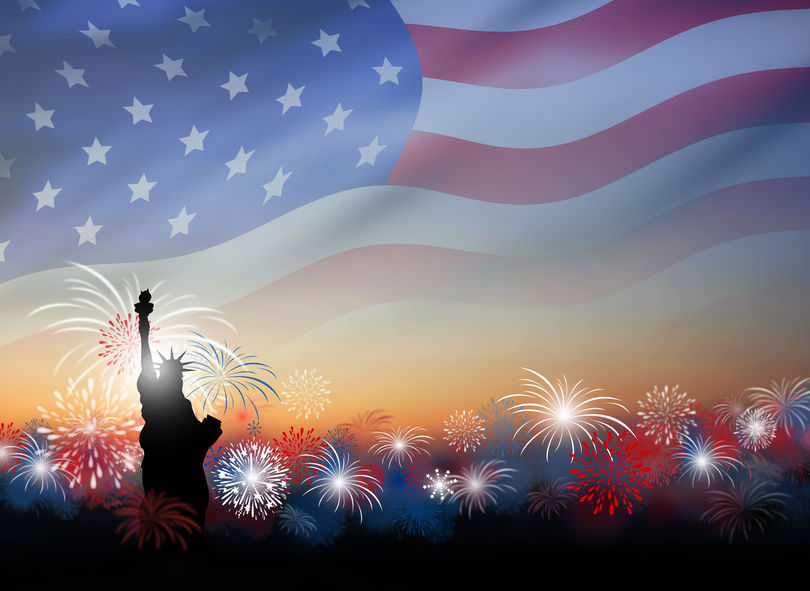
Oh, say can you see by the dawn’s early light
What so proudly we hailed at the twilight’s last
gleaming?
Whose broad stripes and bright stars through the
perilous fight,
O’er the ramparts we watched were so gallantly
streaming?
And the rocket’s red glare, the bombs bursting
in air,
Gave proof through the night that our flag was
still there.
Oh, say does that star-spangled banner yet wave
O’er the land of the free and the home of the
brave?
September 13, 1814 dawned rainy and frigid. Despite terrible weather and near-complete darkness, Great Britain’s shells and rockets pounded America’s Fort McHenry, in Baltimore Harbor.
Before the battle started, Francis Scott Key, a thirty-five-year-old Georgetown lawyer, boarded the British flagship in hopes of rescuing a recently-captured American physician. He was unsuccessful. The Brits tied him up and ordered him to wait on a British ship in Chesapeake Bay.
For the next twenty-five hours, Key watched the barrage of Fort McHenry. He later wrote, “It seemed as though Mother Earth had opened and was vomiting shot and shell in a sheet of fire and brimstone.”
Certainly, Fort McHenry would fall to the enemy. But when morning dawned, the tattered but still intact Old Glory, and not Union Jack, flew over the fort, waving America’s victory.
While still aboard ship, Key penned a poem. The Baltimore Patriot printed it, and shortly thereafter “The Star-Spangled Banner” became America’s National Anthem.
Every Fourth of July, for over 200 years, proud Americans still celebrate “the land of the free and the home of the brave.”
Why are YOU proud to be an American?
Tell the story.



 Loading ...
Judith I really like this. I have a question for you on this.
What is your question?
How long should I write my short story
Try 300 words.